When Your Pet Stares at Their Lead, Are They Actually Telling You Something?
There's a question that comes up in almost every consultation I do, whether it's with a family whose dog has started barking relentlessly at the front door, or a cat owner bewildered by their pet's sudden refusal to use the litter box.
"Is she doing this on purpose?"
It's one of the most human questions we ask about animals. And it's also one of the most interesting ones science is now taking seriously.
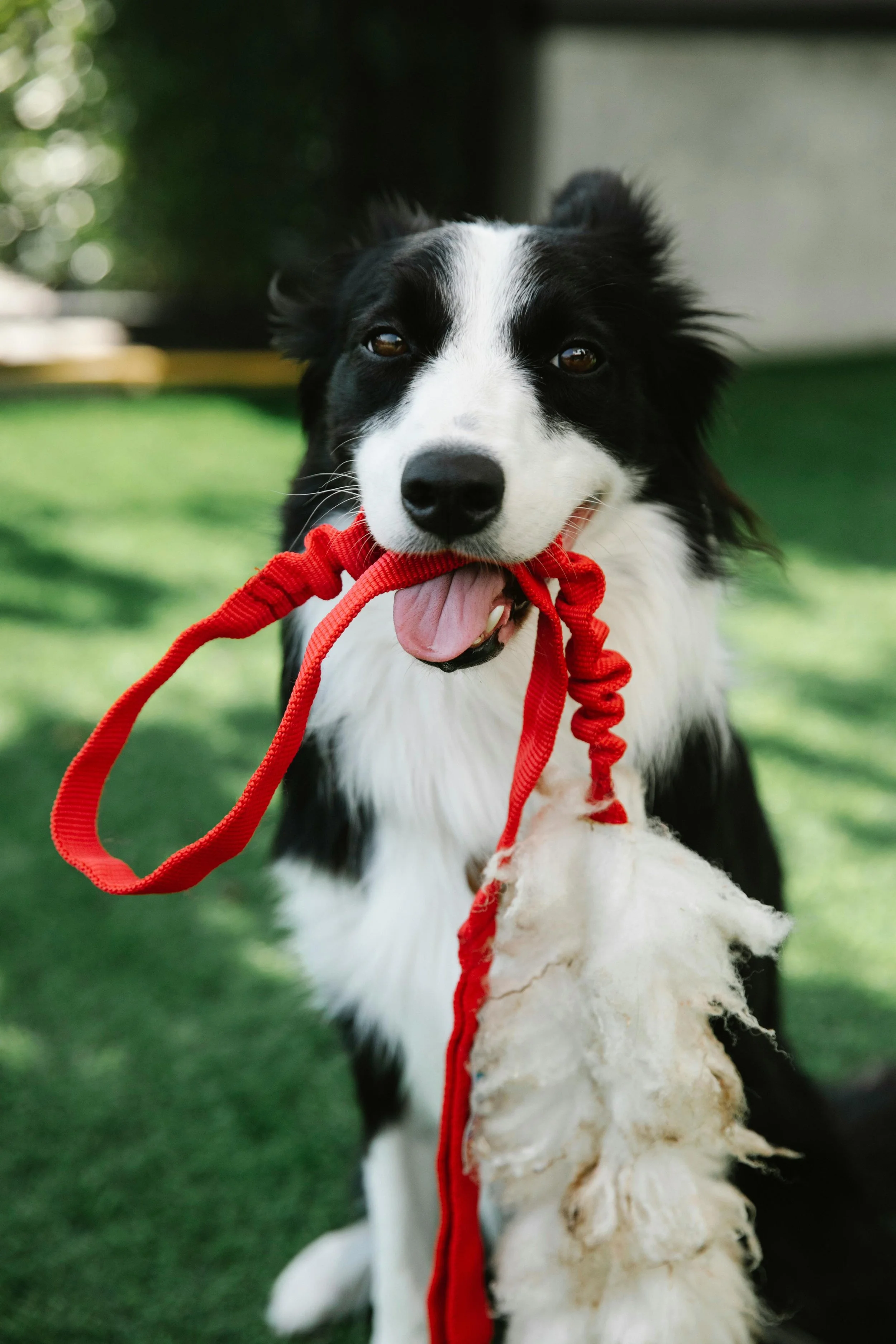
A recent piece in Psychology Today by neuroscientist and equine behaviour expert Dr Janet Jones raises exactly this question through the story of a horse named Mac. Mac had figured out that if he grabbed his halter from the hook outside his stall and threw it into the barn aisle just as a human walked past, he was more likely to be taken to the pasture he loved.
He didn't do this at night. He didn't do it when he already had full-time pasture access. He did it specifically when a person was nearby, and when he had reason to want to go out.
Was that intentional? Or coincidence?
It's a question I find genuinely fascinating and one I think about a lot in my work with companion animals.
The Old View Was Simple
For a very long time, the standard assumption in animal behaviour science was that animals act on instinct, drives, or learned responses. Intent was considered a bridge too far. Animals were essentially treated as biological machines responding to stimuli.
The dog barks because something triggered it. The cat scratches the couch because cats scratch things. End of story.
But animal behaviour science has moved a very long way from that position. And I think many pet parents who live closely with their animals every day already know why.
Over the past few decades, research has confirmed that animals have far richer cognitive lives than we once assumed. We know now that elephants stand beside their dead for days, that crows can plan ahead and even hold grudges, that prairie dogs have something resembling a vocabulary, and that octopuses can solve multi-step problems. In my own field, we've seen enormous advances in understanding what dogs and cats are capable of in terms of learning, memory, emotional processing, and social cognition.
The 2024 New York Declaration on Animal Consciousness, signed by more than 500 scientists and philosophers, formally acknowledged that there is strong scientific support for conscious experience across all mammals and birds, with a realistic possibility extending to fish, reptiles, amphibians, and many invertebrates, including octopuses and insects.
That was a significant moment in the history of how we think about animals.
And intent, I believe, is the next frontier.
So What Does Intent Actually Mean in an Animal?
Intent, in cognitive science terms, involves goal-directed behaviour: acting in a way that is aimed at a particular outcome, and adjusting that behaviour based on whether the outcome is achieved.
It doesn't require language. It doesn't require human-like self-awareness. But it does require some capacity to form expectations about the future; to behave in a way that is oriented not just to what is happening now, but to what will happen if a particular action is taken.
Mac the horse threw his halter at people when he wanted to go to the pasture. When he already had full-time pasture access, he didn't bother. When no humans were present, it didn't happen. That specificity is what makes the behaviour compelling. It's not random. It's contextually appropriate and outcome-oriented.
I see this kind of thing in companion animals all the time.
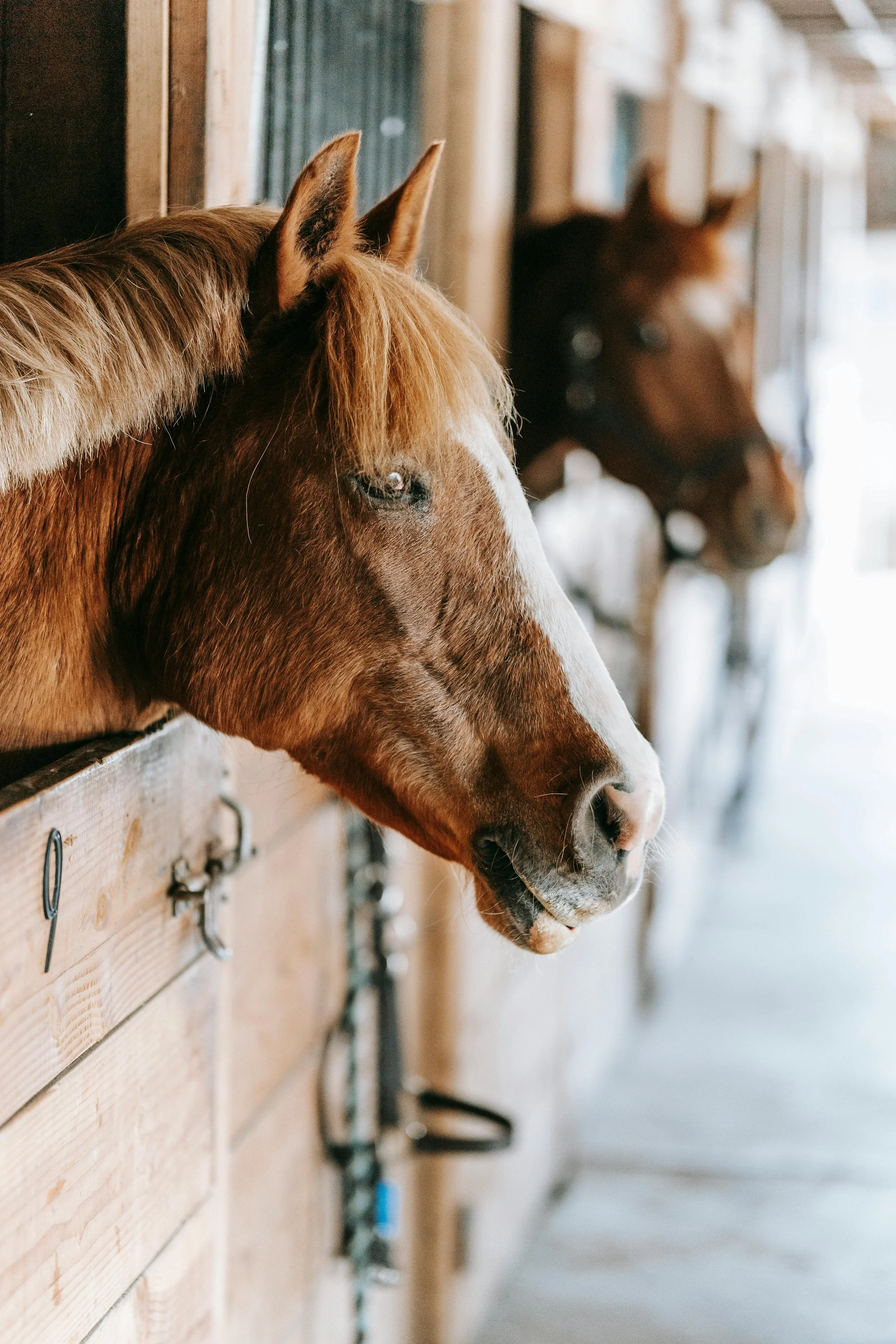
The dog who sits by the back door specifically when they want to go outside, not when they're hungry, not when they want to play, but specifically when they need to go out. The cat who brings toys and drops them at their owner's feet, not randomly, but when they want to engage. The border collie (yes, I'm thinking of my own Lenny here) who boops my leg with his nose, then stares at me, then boops again waiting for me to start patting him leaves very little room for interpretation.
Are these animals behaving with intent?
I think the honest scientific answer right now is: the evidence is building, the question is worth taking seriously, and the old default assumption; that it's always just coincidence or conditioning, no longer holds up particularly well.
Why This Matters Beyond the Philosophical
I'm not raising this because it's a nice intellectual puzzle, though it absolutely is. I'm raising it because how we think about animal intent has very real consequences for how we respond to their behaviour.
If we assume animals simply react; if we treat their behaviour as noise rather than signal, we miss enormous amounts of information about what they actually need.
When a dog is barking, scratching at the door, or following you from room to room, they are communicating something. When a cat is hiding, spraying outside the litter box, or suddenly clingy, they are communicating something. The behaviour is the message. And our job, as pet owners and as behaviour professionals, is to learn to read it.
Asking "is my animal doing this on purpose?" can actually be a really useful doorway into that reading. Because when you ask it genuinely, you start to look at what the animal is oriented toward. What are they trying to achieve? What outcome does this behaviour produce? Does it stop when that outcome is met?
Those are the right questions. And they lead to far more effective behaviour support than simply asking "how do I stop this?"
What I'd Invite You to Consider
The next time your dog does something that seems almost calculated - staring pointedly at their lead, nudging their empty bowl in your direction, presenting themselves at the front door at your usual walk time - sit with the possibility that there's more going on than a simple conditioned response.
The next time your cat yowls, or your dog barks, or your parrot screams, ask what they might be trying to communicate, not just how you can make it stop.
Science is only beginning to catch up to what many of us who work closely with animals have suspected for years. Our animals have goals, preferences, and desires, and increasingly, the evidence suggests, the ability to take deliberate steps toward them.
That doesn't make them human. But it does make them far more than machines.
And the more we approach them with that understanding, the better we can meet their needs, strengthen our bond with them, and respond to their behaviour in ways that are genuinely effective.
Dr Kate :)
Dr Kate Mornement Ph.D is a Board Certified Applied Animal Behaviourist (CAAB) based in Melbourne, Australia, with over 20 years of experience working with dogs, cats, parrots and their people. She consults in-home across Melbourne and virtually worldwide.